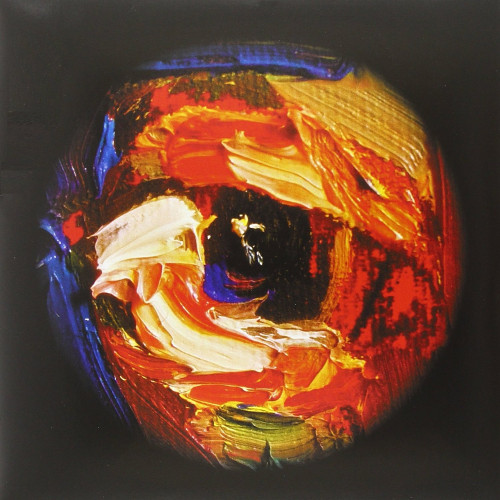
 I first discovered Jean Ray’s 1943 novel at random in a bookshop, and thought it looked fascinating, but it was quite a while before I got round to reading it. I told a friend I’d bought it, and he said “is that the one where… (this part intentionally left blank)” and I was like, “Probably, but I don’t think I’m supposed to know that yet…” and put it on the TBR pile until I’d forgotten.
When I eventually picked it up a couple of years later, I made the mistake of reading the foreword, which was one of those really irritating ones that says “it’s not really giving anything away to tell you that…” and then told you the thing. Fuck it, I thought, and read it anyway.
There’s an argument to be made that it’s not really a twist, but I don’t think it’s a particularly good argument. And Harry Kümel’s 1972 film adaptation DEFINITELY treats it as a twist, with dramatic reveal music an’ all. And that’s the version I’m here to talk about.
Our protagonist, Jan, is played by Mathieu Carrière, managing to pull of the remarkable trick of spending the early ’70s looking and acting for all the world like David Bowie would in the mid-’70s. Indeed, he’s sometimes been referred to as “the Belgian David Bowie”, but that’s as reductive as it was when I just did it, and neither of us should be encouraged.
Jan, a sailor, returns to his childhood home, the titular Malpertuis, where he finds himself embroiled in all manner of frankly bizarre shenanigans, many of them involving Susan Hampshire, who plays several roles. But first he takes a (not entirely planned) detour to a bawdy house in a sequence it’s impossible not to imagine Tom Waits having had in mind to some degree when in his Rain Dogs era. It’s a standout scene in a film full of standout scenes, but things only really kick off when Malpertuis itself takes (or rather becomes) the stage.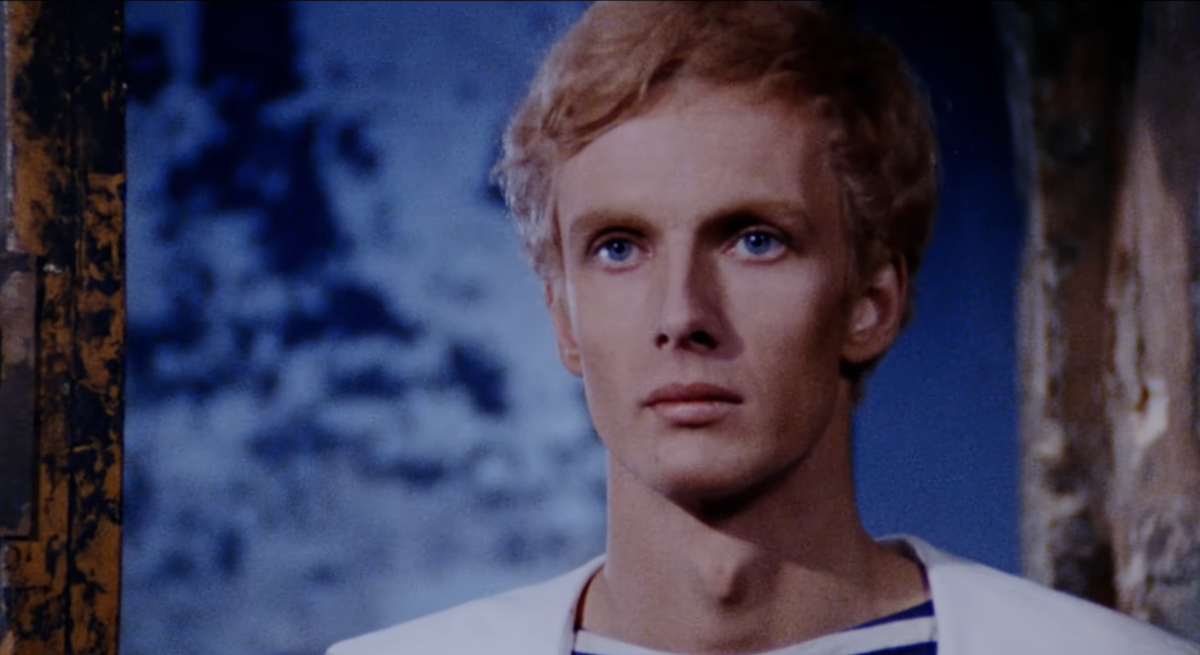
Radiance have packaged it beautifully in a wonderfully sturdy slipcase, complete with a full colour book including new essays from Lucas Balbo, Maria J Pérez Cuervo, Willow Catelyn Maclay, David Flint and Jonathan Owen, examining both Malpertuis and its director from almost every conceivable angle. It releases alongside a similar edition of Kümel’s earlier Daughters Of Darkness, which I have never seen but am now very curious to check out.
With cosmic horror having made something of a sly comeback in recent years (as the malign influence of HP Lovecraft has given way to the Thomas Ligottis and Laird Barrons of this world), there’s never been a better time to immerse yourself in the secrets of this strange, physics-and-architecture-defying house and its wonderful gallery of grotesques for a unique slice of surrealist horror.-Justin Farrington-