
I’ve only relatively recently gotten into Thelonius Monk and he’s quickly become one of my favourites. My entry point into jazz is closer to free stuff – Ornette Coleman initially, later John Coltrane, Miles Davis, Albert Ayler and the like. Monk is anomalous in those circles — gorgeous tunes, but definitely still coupled to the ideas of ’40s and ’50s jazz.
Consequently, Monk is subtly very weird — there’ll be odd key shifts, dynamics where he hammers a key relentlessly, super-loose extemporisation, but never such that it wouldn’t be appealing to your trad jazz lover. Absolutely magic and, what’s more, benefitting from extemporisation and improvisation from different players; and so here we have two cuts from the latter Monk pie.
Monk And More (Hobby Horse) is from Richard Andersson with Rudi Mahall, Artur Tuznik and Kasper Tom, European players who run his music through a blender of styles. Their rendition of “Brilliant Corners” picks up the pace an amount, flattens out some of the sharp and discontinuous edges of the original and finds space for a smidge of squawking.
The band knows where they are in the tune — it’s not an outright desecration — but this is certainly an answer to the question of what Monk might play like if he was coming up in the ’70s. Pianist Tuznik throws a lot at the chord cycle — plenty of Monk-ish disjunctions but also florid runs and rapid accelerando. Similarly, the Andersson bass has a lush solo, pulling away at threads, only to shred them later on. The outfit’s take on “Ask Me Now” — originally a glassy, contemplative and placid number — acquires an amount of shaved jagged edges. Mahall (clarinet) pulls a lot out of the instrument. In parts it’s like he’s summoning Ayler — plenty of slurry runs and threshold embouchure (though not that sinuous vibrato that marks Ayler’s horn). But of course, it being a clarinet, it’s also capable of some gorgeous clear notes. Tuznik again lets fly with some falling-down-the-stairs piano action.This band illustrates an important thing with jazz ensembles — the rhythm section is absolutely holding it down when the other instrumentalists are letting rip, subtly keeping the foundations solid until it’s their turn to earthquake up the joint. Actually retaining the spirit of Monk inasmuch as the music sometimes seems to float away, ultimately refocussing into those gorgeous melodies that he left for us.
They take the time to have a go at “Pannonica”, which may well be my favourite Monk, Mahall’s clarinet timbre just slightly softer and more rounded than your average horn. The piece always sounds like madness to me and they’ve captured the chasing-its-own-tail of the rhythm here. Again, Tuznik’s solo, all turns and weaving, makes it a struggle to feel the downbeat until we’re returned to normal space and time with the head. Arguably Tuznik and Mahall take a more aggressive approach than Monk did to the melody and it’s a welcome mutation of these well-worn tunes. I should say that for all the invention and wobble here, these are solidly-delivered tunes — it’s not a radical deconstruction of Monk, but it’s definitely an homage to his awkward, fractuous, composite genius.![[Ahmed] - Play Monk](https://freq.org.uk/wp-content/uploads/AHMED-Play-Monk.jpg)
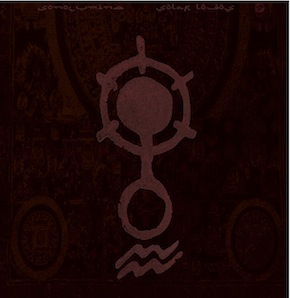
أحمد [Ahmed] features Pat Thomas, Joel Grip, Antonin Gerbal and Seymour Wright and it’s probably arguable that this is a less demure quartet to be doing Monk.
Play Monk (Otoroku) is described as “atomising” Thelonius Monk’s standards — “transforming each composition into a shifting quantum time artifact”. In practice this means a pretty reckless approach. If Monk And More was a respectful rendering, pushing and pulling at the edges, this is a more thorough homage to Monk the iconoclast.
I know of Pat Thomas and Seymour Wright from the free improv world, so it’s immediately nice to hear them in more song-based territory. Each does a great job of sending time fragments scattering, Wright often well outside the tempo and absolutely intentionally. Opener “Bye-ya / Epistrophy” does a good twenty-plus minutes of vamping around the original theme; tempos shift, chords are extended and contracted. Often it sounds like the rhythm section are desperately trying to pull the horn and piano into their world; given the nature of the players it’s more likely they’re investing what are now ‘standards’ with the kind of freewheeling chaos of jazz traditions coming after Monk. Given that it’s a lengthy piece, it’s germane to point out that the drums spend a fair amount of time in the skittering repetition that the Krautly-inclined amongst you might recognise as Liebezeitian. Moreover, they keep finding new ways to expand and contract, like falling down stairs, collecting themselves and finding another floor to jettison messily down.Their nearly half-hour version of “Round Midnight” — possibly the best-known of Monk’s tunes? — starts off stately enough, but quickly dissolves into acidic collapse. We get the motif through once and then everything starts melting. By the time rhythm is reintroduced with Thomas’a choppy stabs, we’re into a very different tune indeed. While Grip’s double-bass alludes to the theme sparingly, Wright does some free improv splatter and pop and somehow does some backwards effects on the horn (with samples? Pedals? Moxie? Dunno).
If you know the “Round Midnight” tune, this doesn’t stop sounding like that, but it’s perennially battered into an entirely distended shape. Again — faithful to Monk by taking him to the letter of ‘experimental composition’; by the time the motif re-enters at the end we’ve been on an incredible, indelible journey. The longest track on this, “Evidence” (at almost thirty minutes) does a great job of obscuring its sources. The original is gorgeously fractious (a Monk mainstay), one that rewards the itchy odd-rhythmed exposition with some lush harmonic and melodic variation. This version… does that, but there’s probably more of the archly fractal to get through first. I’d say that unlike the first CD in this round-up, this is distinctly into experimental music territory.Where Monk will repeat a hammering motif a few times, Thomas here really drills into the idea of awkward piano playing. If the original is a wily parlour trick, this is the feral apocalypse version. Clever, sure, but unrelenting. For a lot of it it perhaps has more in common with industrial metal — no harmony, no melody, just nailing the rhythm over and over.
I’d say it’s worth saying that this isn’t a formless mess; personally, I’m less inclined towards free improv on record these days, but this is the kind of record I wish I had more of — defiantly and obtusely improvised, BUT with strong heads, strong melodies and motifs that the band can refer back to. Rather than the formless pure-textures of free improv, this has the contrast and colour of using conventional form to make the extemporisations more savage.If you squint there’s a few Dixie basslines in here and plenty of conventional jazz going on, but it’s very much smeared across with a hardier and more thorough improvisation.
~
So these records, finally, are perhaps two sides of the Monk coin — one a stretching and contortion of what was already there, one pinning Monk to the mast of improvised music and sailing off into the whorling void. Big up yourselves, everyone concerned.-Kev Nickells-



One thought on “Richard Andersson with Rudi Mahall, Artur Tuznik and Kasper Tom – Monk And More / أحمد [Ahmed] – Play Monk”