Park Chan-wook cooks up another idiosyncratic blend of thrills and satirical dark comedy with this sublimely ridiculous tale of a newly redundant paper manufacturer so intent on getting his next job that he’s prepared to terminate the other applicants… with extreme prejudice.
As the sitcom The Office observed, a setting as bland as paper-making provides a nice blank page to paint your comic curlicues on. Here it (and, by extension, capitalism) makes a fragile structure indeed for everyone except those at the very top of its vast, windswept house of cards, and Park makes the point by thwacking away at its lower levels with a baseball bat and an evil grin.
Lee Byung-hun’s Yoo Man-su (ie Mr ‘Yoo’ – an everyman nomenclature that puts the onus of bucking the system on to the audience) has to work that much harder to elicit the audience’s sympathy, partly by striving to remain visible through his director’s swamp of expertly taken piss, but mostly so that we’ll be on his side when he starts taking matters murderously into his own hands.
Pointed changes in the weather and smooth crane-mounted camera movements suggest the eyes of a watchful god, but one who’s more wryly amused by his creations than benevolent towards them. The family’s holiday-themed costuming and playful mannerisms, as they breathe in the comfort and sanctity of their large modernist home, glint in bright, carefree summery light.
As an early portent of doom, their young daughter is a talented cellist, her music representing the ever-receding possibility of future redemption and prosperity. But it’s mocked by scraped pizzicato violins intruding on Cho Young-wuk’s darkly gymnastic score like drunken football hooligans at a Luigi Boccherini recital.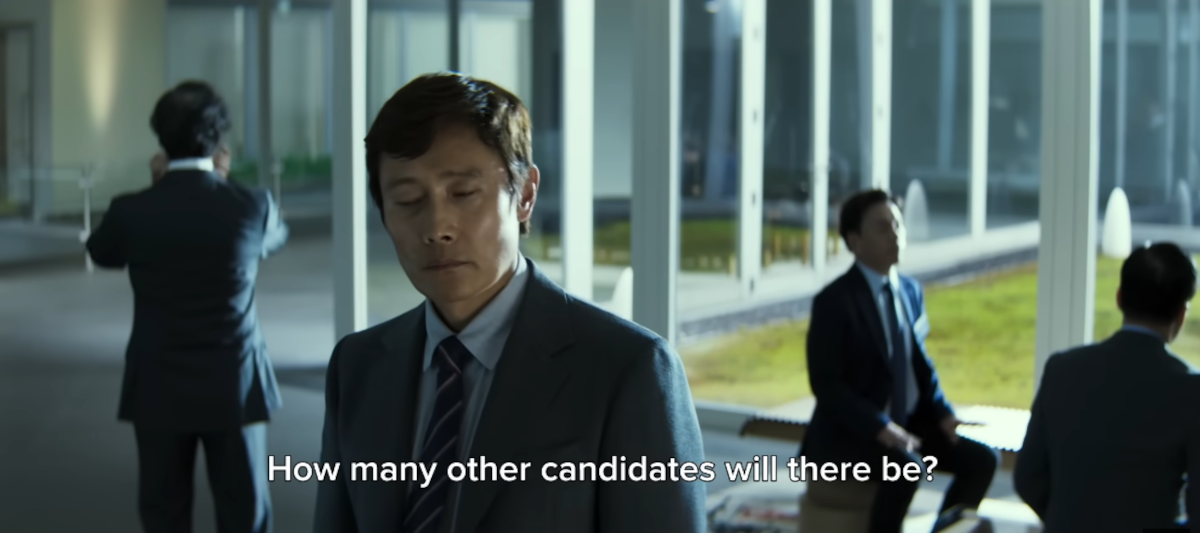
Yoo’s initially reasonable, if infuriated, responses to his sacking are drowned out by passing trucks, while he and his comrades stand in the yard, dwarfed by stacks of uncut timber, the fruits of what will henceforth be someone’s else labour. Later, he’s surrounded by living plants and trees, the raw material of his profession, sitting there in smug eco-conscious commentary on his failure to profit from them. There are moments when he’s literally begging on his knees, being knocked aside by his superiors. However, the camera stays right down there with him, resting a metaphorical hand on his shoulder even as it reminds him about the uncomfortable truth of his circumstances.
In an echo of similar sincerity, Park uses point-of-view shots and ventriloquial voiceover as shortcuts into his characters’ heads. Likewise, our harried hero soon comes to identify with his intended victims in a subjective flurry of empathy. They may not unite and throw off their chains, but for a while at least there’s the germ of such a truly outrageous idea.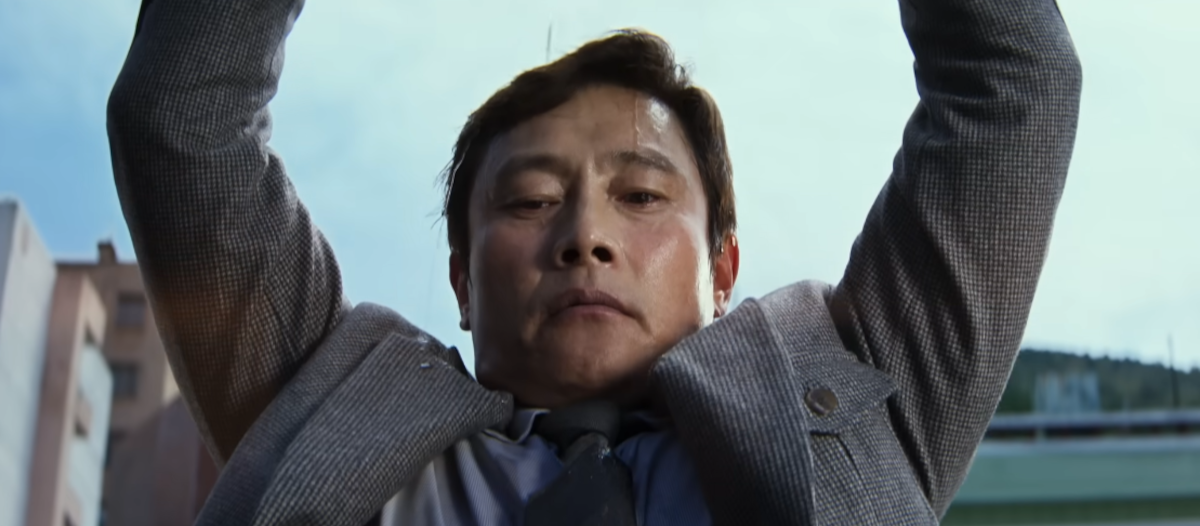
Like all truly effective satire, No Other Choice balances the bullet points of hard-hitting comedy with an impenetrable mantle of sympathy for the real butt of the joke. With a lethal combination of meticulously crafted compositions, telling symbolism and inventively witty scene transitions, not to mention humanely funny performances by the whole cast, Park Chan-wook makes this busy and complicated task look easy and effortless.
-Stew Mott-