
From the opening shot, cinematographer Pau Esteve Birba decides that the most extreme of close-ups isn’t going to reveal the film’s elusive truths about reality, identity and meaning, leaving his illustrious employer to seek another way around the characters’ many defences. No-one ever said processing grief through art was easy – even if Almodóvar makes it look that way.
As complicated as the multi-dimensional plotting is, he is too skilled a director to rely on simple narrative orthodoxy. His manipulation of our emotional and aesthetic responses, through colour-coded design, invisibly clever editing and exquisite musical cues, consistently smoothes over any incipient confusion about where we are and who we’re with.
Strains of inappropriate humour reveal the story’s deliberate artifice, interrupting the usual realism like a persistent child breaking its parent’s concentration with a refrain of “why?”. But realism has always been a slippery tool in Almodóvar’s hands, to be toyed with or disposed of on a (usually sound) whim. Besides, someone has invited the spectre of death to this particular party, and the drama lies in how the social skills of the other guests are tested by their attempts to make it feel at home.
Alberto Iglesias’s typically melodramatic score uses busy string arpeggios to articulate the pains and the passions beneath the controlled surface, emanating noir thriller vibes with effortless agility. But there are also specific musical interludes where a song is sung, either in person or on a recording, seeking to drag emotion out of the characters, their elegantly lachrymose results a possible tribute to the late Rebekah Del Rio’s memorable turn in Mulholland Drive.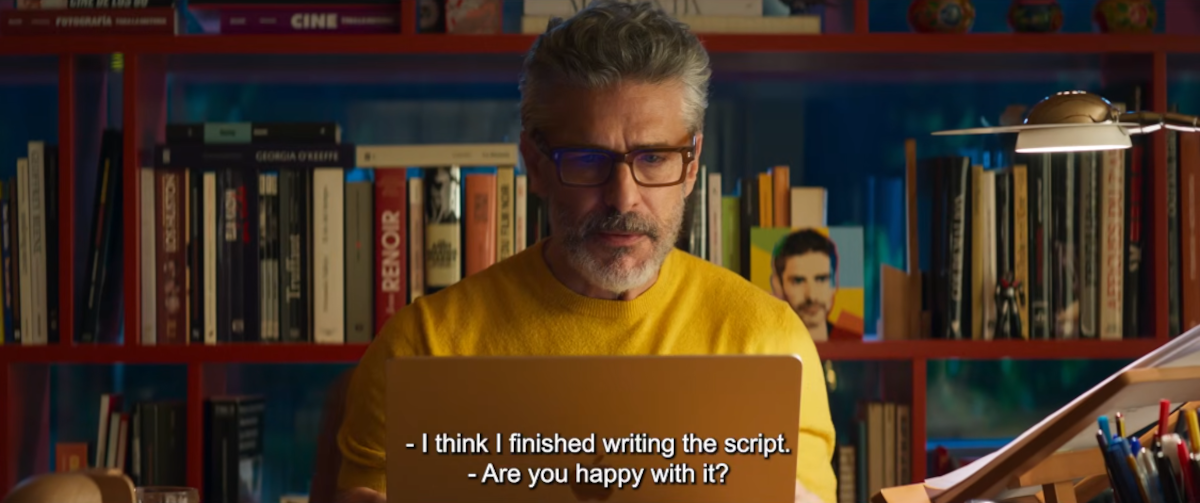
As Raúl, the filmmaker fumbling his way through Elsa’s story, Leonardo Sbaraglia is an Almodóvar substitute in the same vein as Antonio Banderas in 2019’s Pain And Glory (in which Sbaraglia co-starred), right down to the tidy beard and distinguished winter plumage. But in his crotchety passivity, he mirrors his creator as much as his creation.
The script’s use of two different time periods (2004 and 2026) establishes Elsa’s adventure as a glorified memory of Raúl, which through Almodóvar’s unique alchemy serves to intensify the emotional impact, not diminish it. In any case, for a semi-autobiographical film-maker, the difference between remembrance and imagination can be as slim as a frame of celluloid.
As is often said of novelists, a film-maker resorting to a protagonist who’s also a film-maker is the first sign of having completely run out of ideas. However, Almodóvar ushers us with his customary deftness through both of his avatars’ flagging, constipated careers, stopping off at moments of luscious grace in search of resolution, or at least acceptance, for them.
The textural pleasures and playfully deadpan humour of Bitter Christmas will please seasoned fans and newcomers alike, so even if it is (as one character meta-frets) a minor entry in his colourful canon, it’s still an addictive gateway drug to this veteran director’s long and storied odyssey of truly self-aware self-examination.-Stew Mott-