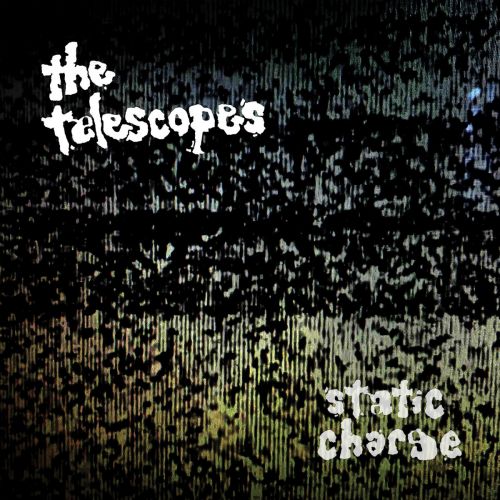
 There seems to be yet more light leaking into Stephen Lawrie‘s The Telescopes these days, and with their seventh LP on Tapete, these seven tracks — although fairly dark of title and torpid of beat — allow flashes of sky and dust-flecked vistas into the mix.
The simplicity is so effective and these vocals really suit the insistent guitar sound, and with the double-tracked harmony vocals you can’t help thinking that Stephen is in a more accessible place, the widescreen reverbed guitar of “Revolutionary Blues” only adding to the impression. The vocals are still shaded but striving for the light. The background synth drone is what plays with your mind while the guitar becomes a sparse thread picking its way across the bass throb and sparse beat.
The songs still retain The Telescopes’ aesthetic and are still so effective, considering the lack of urgency; but it is the resolution that makes it work. You feel Stephen’s belief in every stitch of the sound and these variations on the recognised formula are still compelling as subtle, little textures draw attention and differentiate from track to track; and the odd emotional outburst, be it vocally or guitar-based, can send a shockwave through the listener and break the reverie.
The constant evaluation and reworking of The Telescopes’ sound is what keeps them relevant and yet oddly existing outside time. Nobody really sounds like them and hasn’t done for years; and for all the flow of ’80s and ’90s bands reforming and reiterating, The Telescopes continue on their outward trajectory, still searching and rewardingly still discovering.
-Mr Olivetti-