
La Bâtie Festival, Geneva
2 September 2026
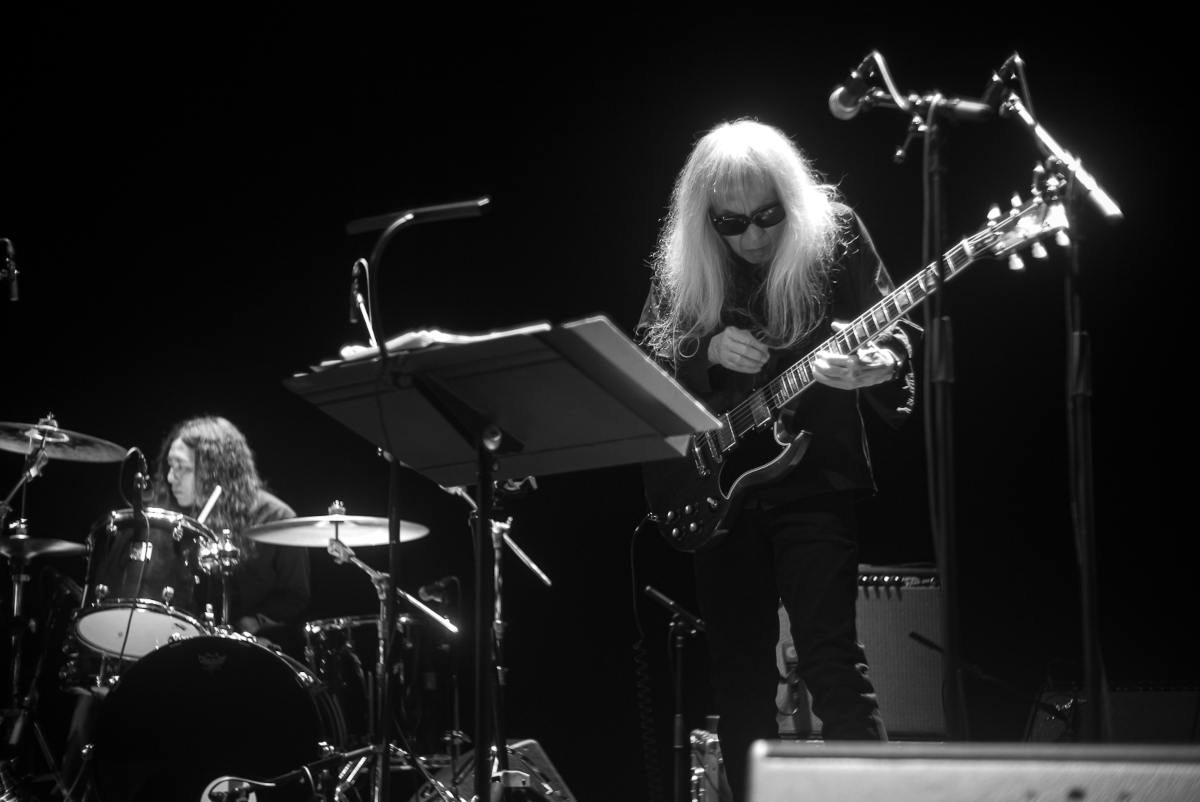
People who are fond of music will doubtless be aware, but Fushitsusha are the best rock band. Better than the one that you like by, like, a lot. This show was two hours+, which is of course absolutely too long for a concert unless it’s really good. And as we’ve established this was really good. Good enough that I forgot my (new, firm leather) shoes were absolutely murdering my feet for most of the set.
If you don’t know Fushitsusha then blurbs will often use terms like ‘deconstruction’ or ‘noise rock’ or ‘avant rock’ and none of those quite do it justice. It’s kind of psychedelic music, if that wasn’t principally rubbish. The reference for me is something like Les Rallizes Dénudés, thought that is also off. What LRD do is to take a basic doo-wop poppy structure in the rhythm section and have a guitar go waaaay into the red. Fushitsusha use that as a kind of springboard, and take out the predictable rhythm section. Where most rock music — most music — deals in clearly repetitious elements, pulses and such, Fushitsusha take whatever is repetitious and hide it.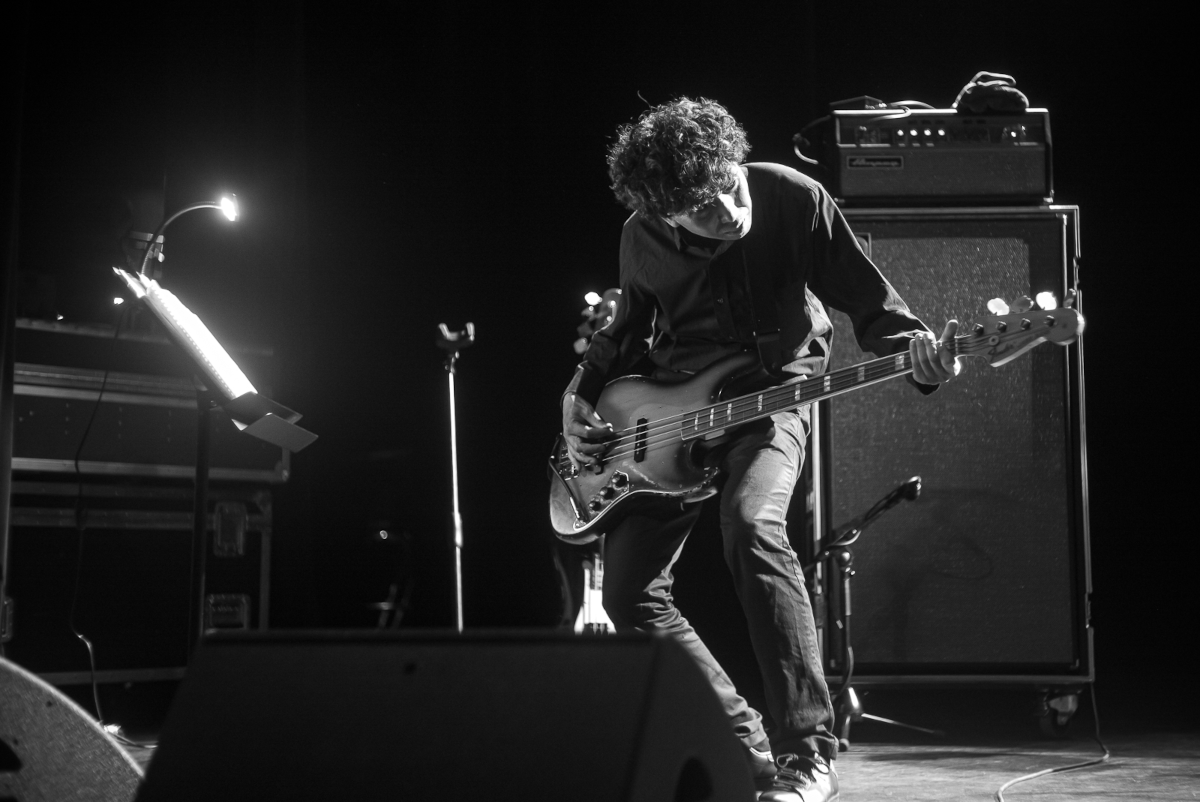
Also the other thing — so where I say that the rhythm section has clear patterns, I can’t quite follow it; it seems that the opening ten minutes or so involved the drummer in patterns like 12, 13, 13, 12, but the bassist was somewhere else entirely. In a very limited sense I imagine it’s like Captain Beefheart — take a pattern and subtract parts, superimpose rhythms. In another sense, Beefheart is anti-coherent, and Fushitsusha sound nothing like Beefheart. Perhaps something closer in terms of the use of rhythm is Iannis Xenakis and his hugely atomistic approach to instrumentation; Fushitsusha are certainly equally monumental, but sonically still rock music.
Anyway so — this is, I think, Fushitsusha’s first live foray (in Europe for certain) with the new rhythm section of Shingo Naruke (bass) and Noriaki Yoshida (drums). Naruke plays a fretless bass, which is important — where the classic Fushitsusha sound was strongly buttressed by Yasushi Ozawa, Naruke’s sound lends itself to Ozawa’s full-throated (but clean-ish) thundering while bringing a level of sinuousness and less tempered melodies. As a fretless guitarist myself, it’s nice to see that it needn’t mean jazz fusion wank, much as I like Jaco Pastorius. Often the melodic bass lines sound that much more evil.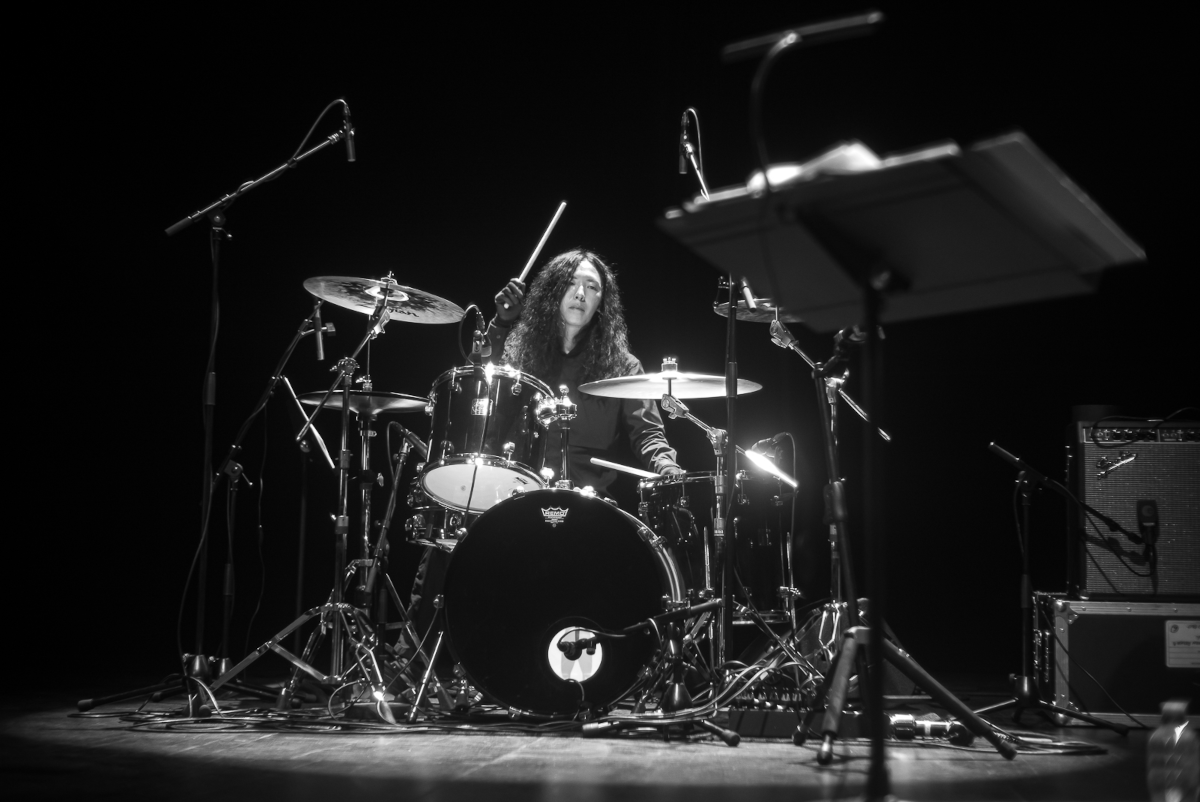
So the thing I’m establishing here is that the rhythm section is working in apparently contrary motion; there’s definitely a throb that operates like a pulse, but I couldn’t have nailed a downbeat all evening. Yoshida and Naruke nail several, seemingly out of nowhere. Which makes me think that there’s cycles going on — say like how a 4 and a 5 will overlap on the 20, but also the beats are never played like 4/4 and 5/4 — too many rests to make that musical thinking obvious.
Importantly for me then — this is very musical music, and it’s at pains to hide itself. It’s not that it’s abstract (although it clearly is) so much as it’s a sustained assault on the typically asinine musicality of rock music in general. Always it could’ve been doing this, and always it chooses to make the pulse obvious, the time signatures glaring, the melodies linear.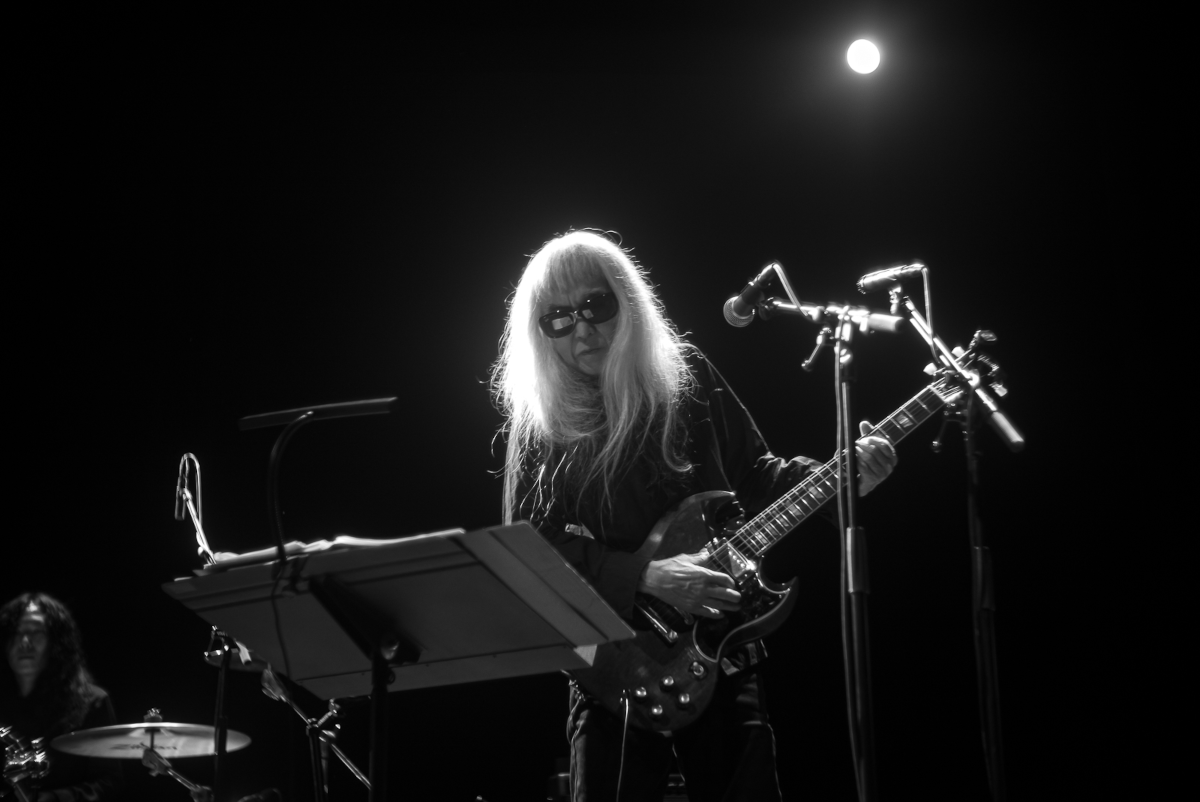
Perhaps the first half of the set is more subdued — songs where the rhythm section predominates and Haino accentuates sparingly. Something like a well-planned meal — have all the sophisticated stuff up front and then the last quarter is where he brings out the big guns. And by big guns I mean the most horrific sound a guitar can make. Not merely white noise (although that’s there) but a very punctual sound (as in, ripping holes in space).
This is a bit of a review, but there’s a sense of my bandstanding about why I think Fushitsusha are important so I kind of want to carry on with that. Rock music tends to dote on repetition, which is fine. We all love NEU! and Faust. And dancing and techno (and electronic music traditions arguably supplanted rock as the musical traditions for fucking). As an artform, rock music rarely rises above that though — there’s plenty of fiddling about with a few dials and I’ll always enjoy a bog-standard hectoring eighteen-minute hardcore set.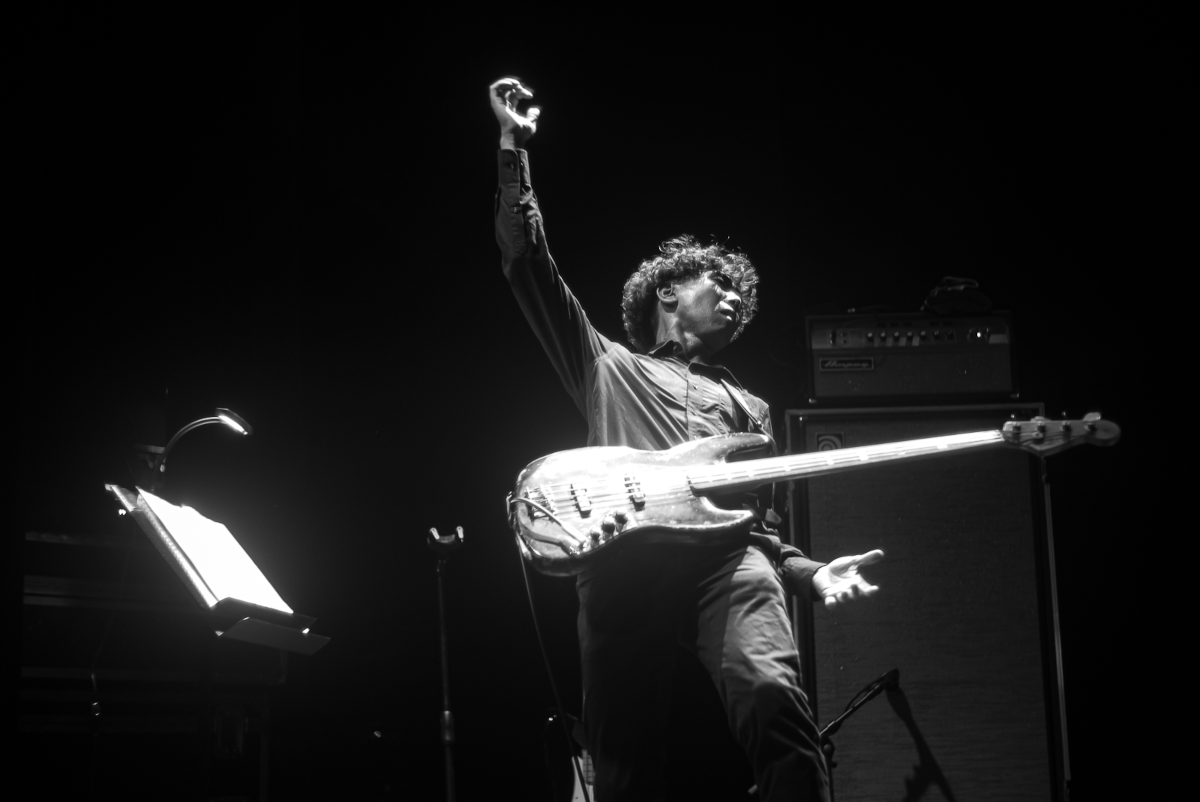
But to the thing I’m actually reviewing — the new material is very much Fushitsusha. I have a faint sense that it’s like my other fanboying, Mark E Smith, where Haino is a long way passed the point of needing to establish what Fushitsusha is about, and he’s pushed a long way into what Fushitsusha is.
There’s a related thing here — I’ve seen Haino plenty of times, solo and in ad-hoc improv things. He’s always better than most. But Fushitsusha is his best project — it’s the one where he clearly puts most concentration into it (hence kicking the drummer’s bass drum tonight for some indiscernible transgression). It’s the one where he’s seemingly given himself the time and space to compose it.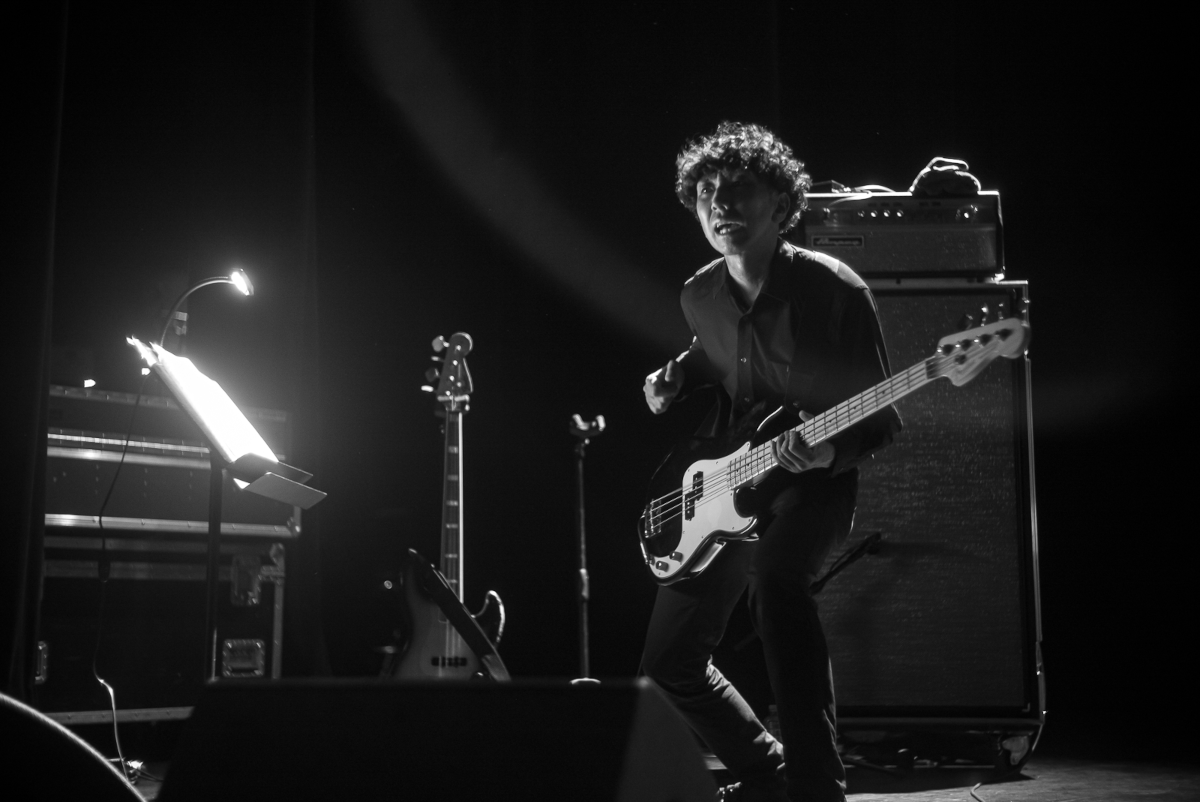
Haino is like Kalthoum there — he’s doing the improvising, he’s cajoling the musicians this way and that, he’s pushing to this rhythm or that dynamic (very clearly with wide hand gestures). So the performance isn’t ‘composed’ in the sense of everything is laid out before but rather there are sections, ideas, notions (all being read from music stands) all slotted together as and when. It’s improvised because a lot of it isn’t planned; it’s composed because a lot of it has the pencil-sketch outline.
And a not-too-fine point at the end of that — the difference between Fushitsusha and Haino solo / duos (etc) is that these are compositions in a rock music sense, this isn’t just rock-shaped noise (like, say, The Dead C, who wouldn’t know a rest if it bit them).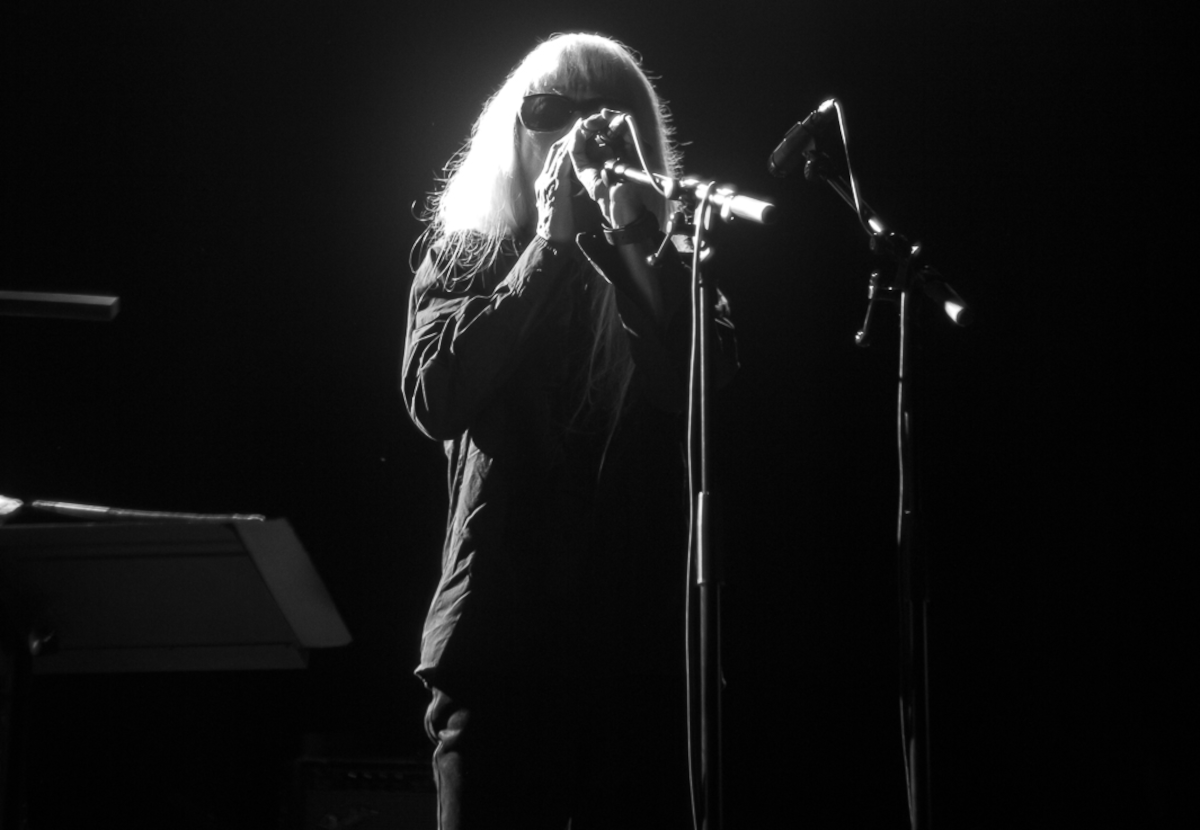
-Words: Kev Nickells-
-Pictures: Agata Urbaniak-


